Credit Linked Government Loan Categories

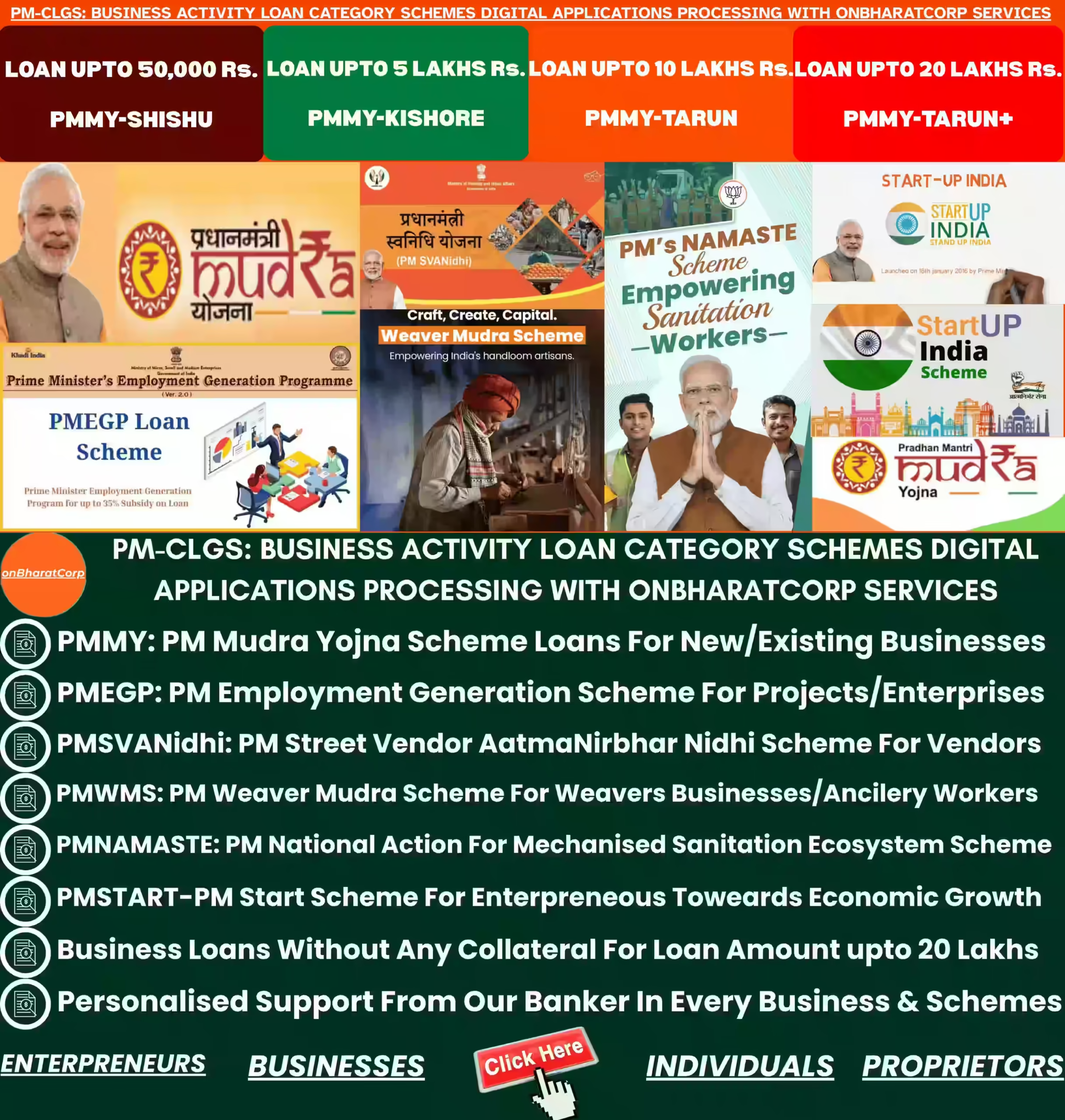
The Pradhan Mantri MUDRA Yojana (PMMY) is a prominent initiative by the Indian government aimed at promoting entrepreneurship and enhancing financial inclusion among small and micro enterprises that are non-corporate and non-farm based. This scheme provides loans of up to ₹20 lakhs to a diverse range of businesses, including shops, vendors, artisans, and service providers, across various sectors such as manufacturing, trading, and services, as well as agriculture-related activities. One of the key features of PMMY is the provision of collateral-free loans, which are accessible through banks and financial institutions, thereby reducing the barriers to obtaining credit for small business owners. The loans are classified into three categories based on the amount: Shishu for loans up to ₹50,000, Kishor for amounts ranging from ₹50,000 to ₹5 lakhs, and Tarun for loans between ₹5 lakhs and ₹10 lakhs. Additionally, there is an optional Tarun Plus category available for repeat borrowers, which allows for loans ranging from ₹10 lakhs to ₹20 lakhs, thereby supporting the growth and expansion of businesses at various stages of their development.
The Prime Minister’s Employment Generation Programme (PMEGP) is a significant initiative launched by the Indian government, aimed at fostering sustainable self-employment opportunities through the establishment of new micro-enterprises in both rural and urban settings. This program, administered by the Ministry of Micro, Small and Medium Enterprises (MSME) and implemented through the Khadi and Village Industries Commission (KVIC), specifically targets artisans, youth, and the unemployed population. By offering financial assistance and subsidies for projects within the non-farm sector, PMEGP seeks to empower individuals to create their own businesses, thereby enhancing economic growth and reducing unemployment. The scheme not only provides the necessary funding but also supports the development of skills and resources essential for the successful operation of these enterprises, ultimately contributing to the overall socio-economic development of the country.
The Weavers Mudra Scheme (WMS) is an initiative launched by the Indian government, specifically under the Ministry of Textiles, aimed at bolstering the livelihoods of handloom weavers across the country. This financial program is designed to provide essential loans that can be utilized for various purposes, including working capital, purchasing tools, and acquiring equipment necessary for the growth and sustainability of weaving businesses. By facilitating access to financial resources, the scheme seeks to empower artisans, enhance their productivity, and ultimately contribute to the preservation of traditional handloom practices. It is important to distinguish this Weavers Mudra Scheme from other acronyms that may share the same initials, such as Warehouse Management System, which pertains to logistics and supply chain management. Understanding the context in which the term is used is crucial for clarity, especially when discussing initiatives that support the artisan community in India.
PM SVANidhi, which stands for Pradhan Mantri Street Vendor’s AtmaNirbhar Nidhi, is an innovative micro-credit initiative introduced by the Ministry of Housing and Urban Affairs in India in 2020. This program aims to support street vendors by providing them with collateral-free working capital loans, with amounts starting at ₹10,000. The initiative was particularly crucial in the wake of the COVID-19 pandemic, as it enabled vendors to revive their businesses that had been severely impacted. In addition to facilitating access to financial resources, PM SVANidhi also promotes financial inclusion and encourages the adoption of digital payment methods among street vendors. The scheme includes attractive features such as interest subsidies and cashback rewards, further incentivizing vendors to engage with formal financial systems and enhance their economic resilience.
PM NAMASTE (National Action for Mechanised Sanitation Ecosystem) represents a significant initiative by the Indian government, spearheaded by the Ministry of Social Justice & Empowerment (MoSJE) and the Ministry of Housing & Urban Affairs (MoHUA). This flagship program is designed to enhance the safety, dignity, and overall welfare of sanitation workers, particularly those engaged in the perilous task of manually cleaning sewers and septic tanks. By advocating for the adoption of mechanized cleaning methods, the scheme aims to eliminate the risks associated with manual scavenging. It encompasses a comprehensive approach that includes providing skill development training, personal protective equipment (PPE), health insurance, and livelihood support, such as access to loans for purchasing necessary equipment. The overarching goal of PM NAMASTE is to achieve zero fatalities among sanitation workers and to eradicate the hazardous practice of manual scavenging, thereby fostering a safer and more dignified working environment for those in this critical sector.
The PM Startup India Scheme represents a cornerstone initiative in India aimed at nurturing innovation and entrepreneurship by establishing a robust ecosystem tailored for startups. This program provides a comprehensive array of support mechanisms, including financial assistance through the Seed Fund Scheme, mentorship opportunities, tax incentives, and streamlined regulatory processes for eligible startups that are innovation-driven and have been in operation for less than ten years with a turnover of less than ₹100 crore. The primary objective of this initiative is to empower these emerging businesses, facilitating their access to capital and market opportunities, thereby enabling them to scale effectively and play a significant role in job creation and overall economic growth. By fostering an environment conducive to startup development, the scheme not only aims to enhance the entrepreneurial landscape but also to stimulate broader economic advancement across the nation.